
Effective Sustainability Communication with EMPCO
Transparent Green Claims for Plastic Products Credibility Without Greenwashing
Navigating new requirements for sustainability communication, environmental labels, and product claims for plastics processors and brand owners.
What Do the New EMPCO Requirements Mean for Plastics Processors and Brand Owners?
Sustainability has become an integral part of product development and a key competitive factor. At the same time, regulatory requirements governing the communication of environmental and sustainability benefits are becoming increasingly stringent. Claims relating to recyclability, recycled content, bioplastics, or CO₂ savings will need to be clear, substantiated, and verifiable.
With the EMPCO (Empowering Consumers for the Green Transition) Directive, the European Union has further strengthened the legal framework governing environmental and sustainability claims. The aim is to better protect consumers from misleading environmental claims while requiring companies to communicate sustainability-related information in a transparent and credible manner.
For manufacturers, brand owners, and plastics processors, this means critically reviewing existing product labels, marketing materials, and sustainability claims and adapting them to the new requirements.
In this webinar, you will gain a practical overview of the key requirements of the EMPCO Directive. Using real-world examples from the plastics industry, we will demonstrate which claims relating to bioplastics, recycled content, and recyclability are permissible, what evidence may be required, and how companies can effectively mitigate the risk of greenwashing.
What Is the EMPCO Directive?
The Empowering Consumers for the Green Transition Directive (EMPCO) is a European directive designed to better protect consumers from misleading environmental and sustainability claims. It complements the existing Unfair Commercial Practices Directive and introduces new requirements for the use of green claims. The directive particularly affects general environmental claims such as “environmentally friendly,” “sustainable,” “green,” or “climate-neutral.” In the future, such terms may only be used where they can be clearly substantiated with appropriate evidence.
Claims relating to recyclability, recycled content, bio-based raw materials, or industrial compostability must likewise be clear, transparent, and verifiable.
Agenda
Objectives and Background of the EMPCO Directive
- Which green claims are permissible?
- Which claims require specific evidence or substantiation?
- Requirements for environmental labels and certifications under EMPCO
- How to avoid common pitfalls in sustainability claims
Practical Examples from the Plastics Industry
- Bioplastics: Opportunities and risks in sustainability communication
- Recycled content: Claims regarding recycled content and material origin
- Recyclability: Evidence requirements and permissible marketing claims
Q&A and Discussion
Take the opportunity to discuss your specific questions with our expert. You can also submit your questions in advance when registering for the webinar.
Why Should You Attend?
Regulatory requirements for environmental and sustainability claims are currently undergoing significant change. Companies that proactively adapt their sustainability communication can increase transparency, strengthen customer trust, and reduce legal risks. This webinar provides a concise overview of the latest developments and their practical implications for communicating the environmental benefits of plastic products.
You will learn:
- Which green claims should be reviewed
- Which environmental labels and certifications may require closer scrutiny in the future
- How claims relating to bioplastics, recycled content, and recyclability should be assessed
- What evidence and substantiation may be required
- How to reduce the risk of greenwashing
- What companies should pay particular attention to going forward
Who Is This Webinar For?
This webinar is aimed at:
- Plastics processors
- Brand owners
- Marketing professionals
- Sustainability managers
- Product managers
- Business development managers
- Compliance professionals
- Managing directors
It is also relevant for anyone involved in developing, reviewing, or managing sustainability messaging for plastic products.
Secure Your Place
Secure your place and learn how to communicate sustainability claims for plastic products in a transparent, substantiated, and EMPCO-compliant manner — now and in the future.

Please note: The webinar will be held in German. It provides practical insights and guidance but does not constitute individual legal advice.

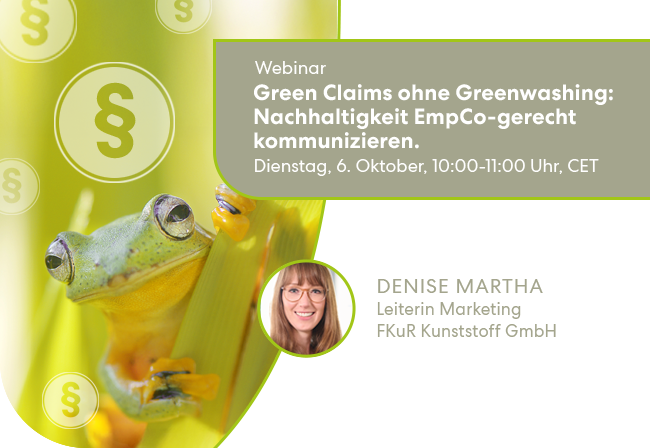
Your Speaker: Denise Martha, Head of Marketing at FKuR Kunststoff GmbH
Denise Martha has many years of experience supporting brand owners in the development and market launch of sustainable products made from bioplastics. She advises companies on developing substantiated sustainability claims and supports them throughout the certification process. Her expertise focuses on the precise and evidence-based communication of sustainability claims and green claims, as well as the regulatory requirements surrounding the Packaging and Packaging Waste Regulation (PPWR) and the Empowering Consumers for the Green Transition Directive (EMPCO). In this webinar, Denise combines regulatory expertise with practical insights and real-world examples from the plastics industry.
Frequently Asked Questions
What Does EMPCO Mean?
EMPCO stands for the Empowering Consumers for the Green Transition Directive. The EU directive aims to better protect consumers from misleading environmental and sustainability claims and introduces new requirements for the use of green claims.
Which Green Claims Are Affected?
The directive covers claims such as “sustainable,” “environmentally friendly,” “recyclable,” “bio-based,” “compostable,” and “climate-neutral,” as well as claims relating to recycled content. Such claims will need to be clear, substantiated, and verifiable.
How Does EMPCO Affect Plastic Products?
Companies should review their existing product labels, marketing materials, and sustainability claims. Environmental and sustainability claims need to be transparent, understandable, and supported by appropriate evidence.
Are Environmental Labels Also Regulated?
Yes. The directive includes requirements for environmental labels and sustainability certifications. The aim is to provide consumers with clearer information and prevent misleading environmental labelling.
Does the Webinar Also Cover Bioplastics and Recycled Content?
Yes. Using practical examples, we will explain which claims relating to bio-based plastics, biodegradable plastics (bioplastics), recycled content (recyclates) and recyclability may be permissible and what evidence may be required.
Is the Webinar Suitable for Plastics Processors and Brand Owners?
Yes. The webinar is aimed at companies involved in developing, processing, or marketing plastic products and looking to align their sustainability communication with current regulatory requirements.