Recyclable or Not? Plastics Recycling in Practice
Improve Recyclability. Use Recyclates Effectively. Better Understand Packaging and Packaging Waste Regulation (PPWR) Requirements.
How to Design Plastic Products for Recycling, Select the Right Recyclates and Consider Recycling from the Material Selection Stage
If you develop, manufacture or market plastic products, you need to decide which material is technically suitable for your application while also considering the most appropriate end-of-life solution. In practice, this raises questions such as:
- Is my product actually recyclable?
- Which material combinations or product components can make recycling more difficult?
- Which recyclate is suitable for my application?
- Can biodegradable plastics be recycled?
- What do I need to consider with regard to the EU Packaging and Packaging Waste Regulation (PPWR)?
In our free webinar, FKuR Kunststoff GmbH and Interzero Recycling Alliance GmbH will show you how to address these questions systematically.
Understanding Recycling. Assessing Recyclability. Designing Better Products.
Recycling does not start at the recycling facility. Whether a plastic product can actually be recycled at the end of its life depends largely on material selection, product design, processing and existing recycling infrastructure. For brand owners and plastics processors, it is therefore becoming increasingly important to consider recyclability as early as the development stage. At the same time, the EU Packaging and Packaging Waste Regulation (PPWR) is raising the bar for packaging, recyclability, the use of recycled materials and the demonstration of compliance with relevant requirements.
Assessing recyclability is not only important for meeting regulatory requirements. It can also help companies translate their sustainability goals into concrete action and consider the implications of material and design decisions at an early stage. A robust assessment provides an objective basis for this process and helps companies identify where products can be optimized for recycling in ways that are both appropriate and technically feasible.
Our webinar provides practical insights into the key factors influencing recyclability and explores the options available to companies seeking to improve the recyclability of their products.
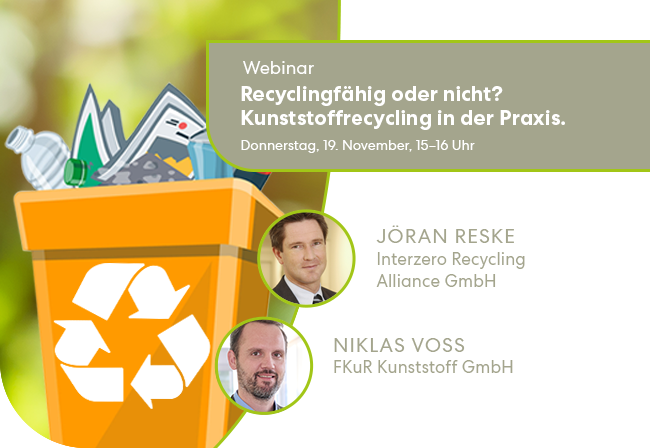 Recyclable or Not? Plastics Recycling in Practice
FKuR Kunststoff GmbH
Material expert and development partner for bio-based, biodegradable and recycled plastics solutions
Interzero Recycling Alliance GmbH
Partner for recycling solutions and the circular economy
60 minutes | German language |Free of charge | Practical insights | For brand owners and plastics processors | Register now!
Your Key Benefits
| Before the webinar | After the webinar |
|---|---|
| Is our product recyclable? | You will be better equipped to assess which material, product and processing characteristics influence recyclability and what to consider when evaluating it. |
| Which recycled plastic is best suited to our application? | You will understand the differences between post-consumer recycled (PCR) and post-industrial recycled (PIR) plastics and know which criteria are relevant when selecting recycled materials. |
| What do we need to consider under the Packaging and Packaging Waste Regulation (PPWR)? | You will gain an overview of the PPWR requirements relevant to plastic packaging and understand the role recycled materials play in meeting them. |
| Can we improve our product’s recyclability through better design? | You will learn the key principles of Design for Recycling and be able to identify common design adjustments that can improve a product’s recyclability. |
| Can biodegradable plastics (bioplastics) be recycled? | ou will understand when and under what conditions biodegradable plastics can be recycled, how recyclability differs from biodegradability, and gain insights into the initial findings of our study. |

Agenda
- Introduction and Overview
- What are recyclates and where do they come from?
- PIR and PCR: What do these terms mean?
- Plastic collection and sorting
- Mechanical recycling
- Chemical recycling
- Opportunities and limitations of recycling
- Packaging and Packaging Waste Regulation (PPWR)
- Requirements for recyclability
- Minimum recycled content: What targets apply to which types of packaging?
- Compostable packaging: When is it permitted?
- Recyclability of Plastics
- Definition: What does “recyclable” actually mean?
- Methods for assessing recyclability
- Recycling bioplastics
- Design for Recycling
- Key principles for successful design for recycling
- Which material changes can significantly improve recyclability?
- Common design for recycling mistakes made by manufacturers
- Q&A with Our Experts
- Have a specific question about recycling, recyclates, recyclability, bioplastics or the PPWR? Submit your question when registering. Our experts will address selected questions during the Q&A session.
Who Should Attend This Webinar?
This webinar is particularly relevant for:
- Brand owners and manufacturers of plastic products
- Packaging and product developers
- Plastics processors
- Materials and polymer specialists
- Sustainability and circular economy managers
- R&D and innovation teams
- Procurement professionals and technical decision-makers
- Companies looking to prepare their products for PPWR requirements
Speakers
Jöran Reske, Expert in Composting and Recycling of Bioplastics at Interzero Recycling Alliance GmbH
For more than 20 years, Jöran Reske has been developing solutions for the composting and recycling of bioplastics. Initially, his work focused on standards development, certification under the *Seedling* label and various roles within industry associations. In recent years, his activities have increasingly shifted towards technical testing in composting and anaerobic digestion facilities, as well as assessing the sortability and recyclability of bioplastic packaging within established recycling systems. His work involves close collaboration with waste treatment and recycling facilities, bioplastics manufacturers, brand owners and retailers.
Niklas Voß, Expert in Future-Oriented Material Solutions at FKuR Kunststoff GmbH
Niklas Voß holds a degree in Plastics Engineering from Darmstadt University of Applied Sciences. He began his career at Hoffmann & Voss GmbH, a company specializing in compounds and recyclates for the plastics industry. There, he gained extensive experience in laboratory management, research and development, quality management and production.
Niklas has been with FKuR Kunststoff GmbH since 2018, where he is responsible for sales of biodegradable and bio-based plastics as well as recyclates. As Head of Sales, he combines his strong technical background and extensive experience in the plastics industry with in-depth market knowledge and application expertise. His key areas of expertise include the selection and application of bioplastics and recyclates, as well as their use in a wide range of plastic applications.
Frequently Asked Questions About Plastics Recycling, Bioplastics and Recyclability
What does recyclability mean for plastic products?
Recyclability describes the extent to which a plastic product can be collected, sorted and processed into a new material or product through a suitable recycling process after use. It depends on more than just the type of plastic. Product design, material combinations, additives, colours, coatings, labels and the available recycling infrastructure can also play a role.
How can plastic products be designed for recycling?
Design for recycling takes into account, from the development stage onwards, how a product can be collected, sorted and recycled at the end of its useful life. Key considerations include selecting suitable materials, reducing problematic material combinations, and accounting for colours, additives, coatings and other components. The aim is to make the product as compatible as possible with existing recycling systems.
Can biodegradable plastics be recycled?
Yes, biodegradable plastics can be recycled using appropriate technologies. Whether recycling is technically feasible and makes sense depends on factors such as the polymer used, the product itself, the available collection and sorting infrastructure, and the intended recycling process. Biodegradability and recycling are different end-of-life options and should therefore be considered separately when selecting materials.
What does design for recycling mean?
Design for Recycling refers to developing products with their subsequent recycling in mind. Material selection, product construction and other design features are chosen to facilitate collection, sorting and recycling wherever possible. Design for recycling should therefore be considered at an early stage of product development.
What are PCR and PIR in recycled plastics?
PCR stands for Post-Consumer Recyclate and refers to recycled plastics derived from plastic waste collected after consumer use. PIR stands for Post-Industrial Recyclate and refers to recycled plastic materials recovered from industrial production processes. The origin and properties of a recyclate are important criteria when selecting materials for a specific application.
What should I consider when selecting recyclates?
When selecting a recyclate, key factors include the polymer type, origin, quality, contamination levels, mechanical and thermal properties, and the requirements of the intended application. Processing technology and the desired product properties are also important. For brand owners and plastics processors, selecting materials to meet the specific needs of each application is therefore essential.
What is the difference between mechanical and chemical recycling?
Mechanical recycling generally involves sorting and processing plastic waste through steps such as shredding, washing and melting to produce a new plastic material. Chemical recycling uses chemical or thermochemical processes to convert polymers or plastic waste into feedstocks or intermediate products. The suitability of each technology depends on factors such as the material and the type of waste stream.
What does the PPWR mean for plastic packaging?
The PPWR (Packaging and Packaging Waste Regulation) establishes requirements for packaging, including its recyclability and the use of recycled materials. For manufacturers, brand owners and plastics processors, this means that regulatory requirements should be considered early in material selection, packaging design and product development.
What role do recyclates play under the PPWR?
The PPWR sets recycled-content requirements for certain types of plastic packaging. Companies should therefore assess at an early stage which recyclate grades are technically suitable for their products and which regulatory requirements apply to their specific applications. Learn more about the PPWR requirements.