Biodegradable Plastic Film Protects Roots from Cockchafer Grub Damage
Helping Young Trees Establish Successfully
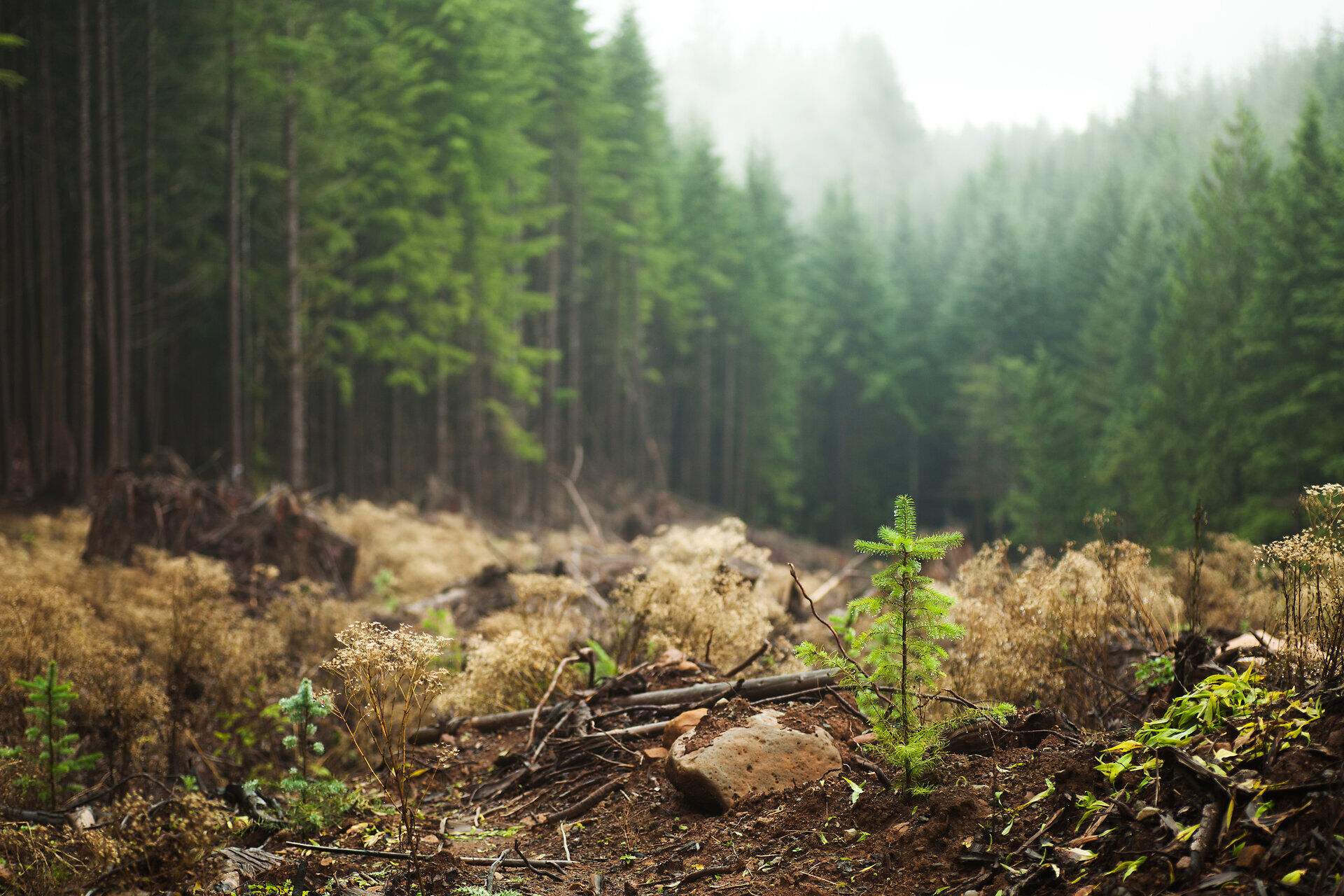
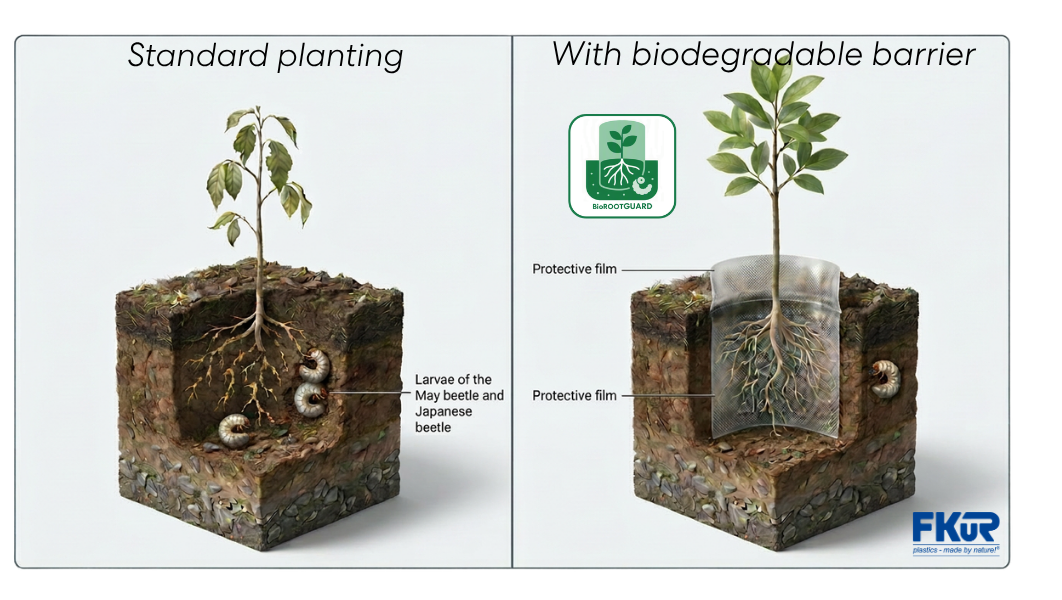
Willich, July 2026 – In addition to climate-related stresses, feeding damage caused by cockchafer larvae and, increasingly, by the invasive Japanese beetle poses a significant threat to the success of large-scale reforestation efforts. The BioROOTGUARD research project therefore aims to develop a biodegradable plastic film that protects tree roots during the establishment phase, reducing the sometimes substantial regional losses caused by these pests.
To achieve this goal, a consortium of industry and research partners, led by FKuR Kunststoff GmbH (hereinafter “FKuR”), brings together expertise in materials development, forestry science, and environmental research within the framework of the BioROOTGUARD project. The project is funded by the German Federal Ministry of Agriculture, Food and Regional Identity (BMLEH) through the Agency for Renewable Resources (Fachagentur Nachwachsende Rohstoffe, FNR) under the Sustainable Renewable Resources funding programme.
Protection and biodegradability
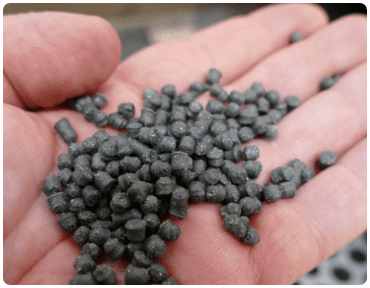
The first step is to develop a plastic compound that biodegrades completely in forest soil without leaving any residues. The subsequent research will focus on how this material can be processed into a film. During the planting of young trees, the film will be placed around the root ball to provide protection while at the same time allowing healthy root development. Once the protection period has ended, the biodegradable nature of the film will eliminate the need for removal, avoiding additional labour and costs.
Beyond its purely mechanical barrier function, the new film is intended to discourage cockchafer grubs from approaching the root zone. To achieve this, natural repellents will be investigated within the project framework to repel these larvae in an environmentally friendly way.
Dr Antje Birkholz, Head of R&D and BioROOTGUARD project manager at FKuR, explains:
“With BioROOTGUARD, we are developing a solution that provides protection during the phase when plants are particularly vulnerable in their root zone and then biodegrades naturally afterwards. In this way, we combine material innovation with the requirements of modern forestry and woody plant cultivation.”
FKuR Coordinates the Development and Implementation Process
As the project consortium leader, FKuR is responsible for the overall coordination of the research consortium and the development of the bio-based and biodegradable plastic material. The company contributes its extensive experience in developing bioplastics with defined properties and supports the transfer of material development towards potential industrial applications. Birkholz adds:
“The development of a material that meets technical requirements while at the same time being able to return to natural cycles at the end of its service life will demonstrate the potential that modern plastics technologies can offer for new fields of application.”
Interdisciplinary Research Consortium
In addition to FKuR, specialists from the fields of materials research, process engineering, forestry science, and environmental analysis are working together on the development and evaluation of the protection system.
- Kelmaplast G. Kellermann GmbH transfers the biodegradable compound developed within the project into the manufacturing process and is responsible for producing the protective films.
- HYDRA Marine Sciences GmbH evaluates the environmental behaviour of the materials and investigates their degradation in aquatic systems.
- Fraunhofer UMSICHT analyses the material properties and the biodegradation behaviour of the developed materials.
- The Forest Research Institute of Baden-Württemberg (Forstliche Versuchs- und Forschungsanstalt Baden-Württemberg, FVA) conducts field trials and evaluates the protective effect under real forestry conditions.
- The Julius Kühn Institute (JKI) focuses in particular on protection against the larvae of the invasive Japanese beetle and investigates potential non-forestry applications such as tree nurseries, viticulture, and traditional orchard systems.
General Information on the research project BioROOTGUARD
Project period: June 2026 to May 2029
Funding: German Federal Ministry of Agriculture, Food and Regional Identity (BMLEH) through the Agency for Renewable Resources (Fachagentur Nachwachsende Rohstoffe, FNR) under the Sustainable Renewable Resources funding programme
Consortium leader: FKuR Kunststoff GmbH
Project partners:
- Kelmaplast G. Kellermann GmbH
- HYDRA Marine Sciences GmbH
- Fraunhofer UMSICHT
- Forstliche Versuchs- und Forschungsanstalt Baden-Württemberg (FVA)
- Julius Kühn-Institut (JKI)
Press + Media
You can download the press release and images here. If you have any further questions, please do not hesitate to contact our marketing team.

Denise Martha
Head of Marketing
Denise Martha
Head of Marketing